10 Core Exercises to Stabilize the Spine: A Practical Guide
Core exercises to stabilize the spine: ten movements, different jobs
Core exercises to stabilize the spine include both held positions and controlled movements. A plank asks you to maintain a position; a heel slide asks you to move a leg while lying down; a cat-cow stretch moves the back itself. Use the exercise name, starting position and movement goal to decide whether your version matches the instruction.
For chronic nonspecific low-back pain, exercise is supported by more than one small study. A Cochrane review included 249 trials and found that exercise probably improves pain compared with no treatment, usual care or placebo. Improvements in functional limitations were smaller. Its results concern a defined chronic-pain population, not every new back injury or postoperative recovery.[PubMed]
The often-repeated “58% improvement” came from a pilot trial of 40 women with nonspecific chronic low-back pain: 20 received twice-weekly non-weight-bearing group exercise for four weeks, and 20 were controls. The abstract reports a 2.32-point, 58% reduction in the exercise group’s pain measure. That result belongs to that program and population; it is not a promised response to this ten-exercise list.[PubMed]
| Task | Examples here | What to watch |
|---|---|---|
| Hold a position | Plank, side plank | Body alignment while breathing |
| Move the opposite limbs | Bird dog, dead bug | Whether the trunk moves with the limbs |
| Move the hips or legs | Bridge, pelvic tilt, heel slide | The intended movement and starting position |
| Practice back movement | Cat-cow, prone extension variants | Which part moves and which version is intended |
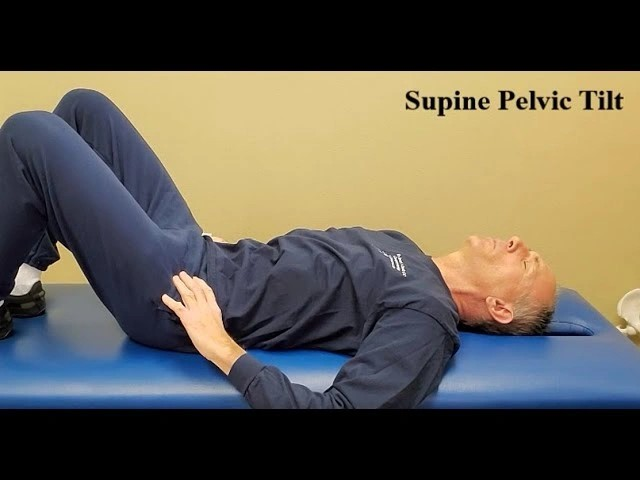
Pelvic Tilt
NHS Fife describes tightening the lower abdominal muscles while lying down and tilting the pelvis so the tailbone rises from the bed. Keep breathing normally. Return slowly rather than repeatedly forcing the whole back into a large arch.[nhsfife.org]
Check whether the pelvis is actually tilting and whether you can keep breathing during the movement. This is a controlled movement, not a test of how hard you can brace. The leaflet uses repetition as comfortable rather than a universal set count.[nhsfife.org]
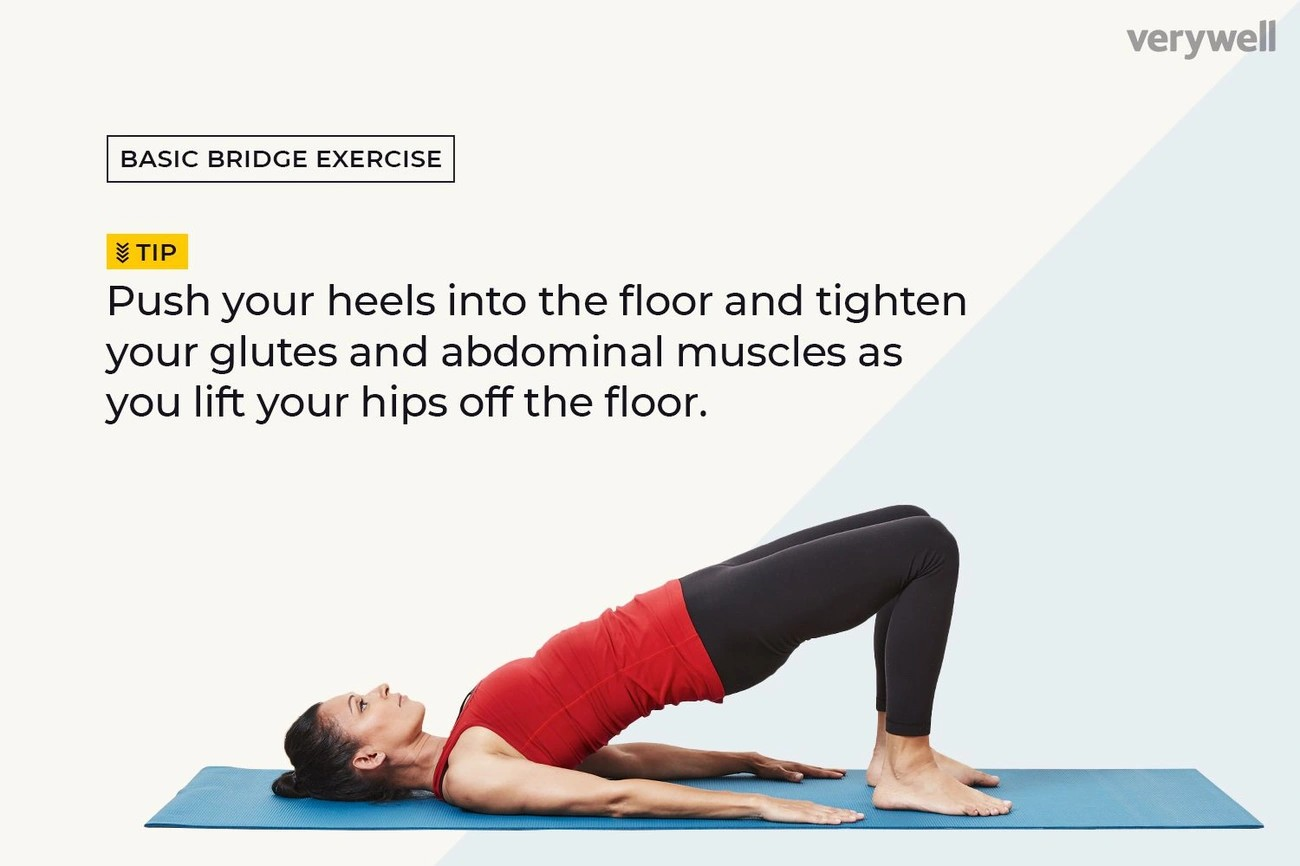
Bridge Exercise
Lie on your back with knees bent, feet flat and arms at your sides. Tighten the abdominal and buttock muscles, then lift the pelvis. AAOS describes a line from shoulders to knees, with the neck relaxed and weight centered over the shoulder blades.[orthoinfo.org]
Do not turn the lift into a large lower-back arch. In the AAOS program, the example is a 15-second hold with five repetitions. Cooper’s leaflet gives a different bridge example: a 10-second hold repeated ten times. Follow one appropriate plan rather than treating those numbers as interchangeable.[orthoinfo.org][cooperhealth.org]
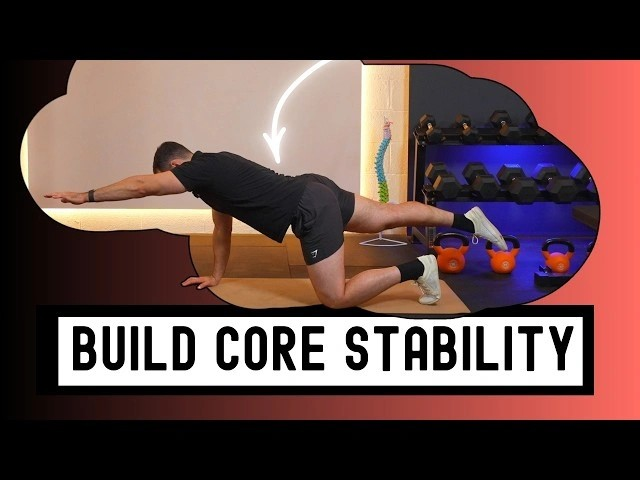
Bird Dog
Begin on hands and knees, with hands under shoulders and knees under hips. Extend one arm and the opposite leg while keeping the back controlled; return and switch sides. Cooper’s physical-therapy leaflet describes this opposite-limb version.[cooperhealth.org]
The useful check is whether the trunk stays controlled as the limbs move. AAOS describes extending the arm first, finding balance, then extending the opposite leg. A smaller movement can be discussed if balance is the limiting task; reaching higher is not the objective.[orthoinfo.org]
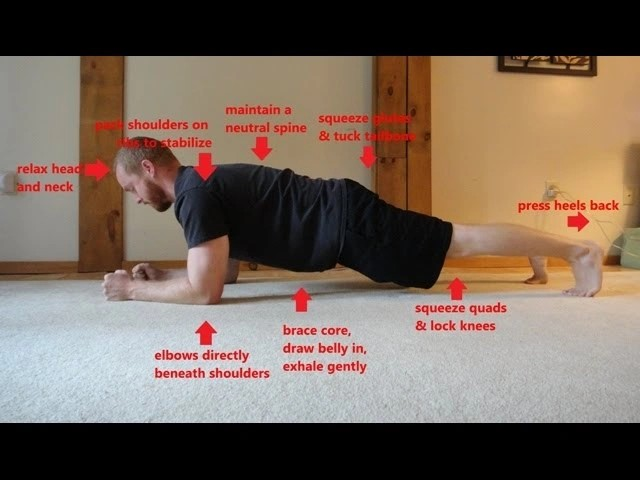
Plank
Support yourself on the forearms, with elbows below the shoulders, and lift the body into a straight position. AAOS includes a knees-supported version if the full hold cannot be maintained. Keep breathing instead of using a breath hold to finish the time.[orthoinfo.org]
Watch for the pelvis dropping as the hold continues. AAOS gives a 30-second example with a rest between repetitions. Cooper describes building toward a longer hold in its own routine. A timed target belongs to its source program; it is not more important than the position being held.[orthoinfo.org][cooperhealth.org]
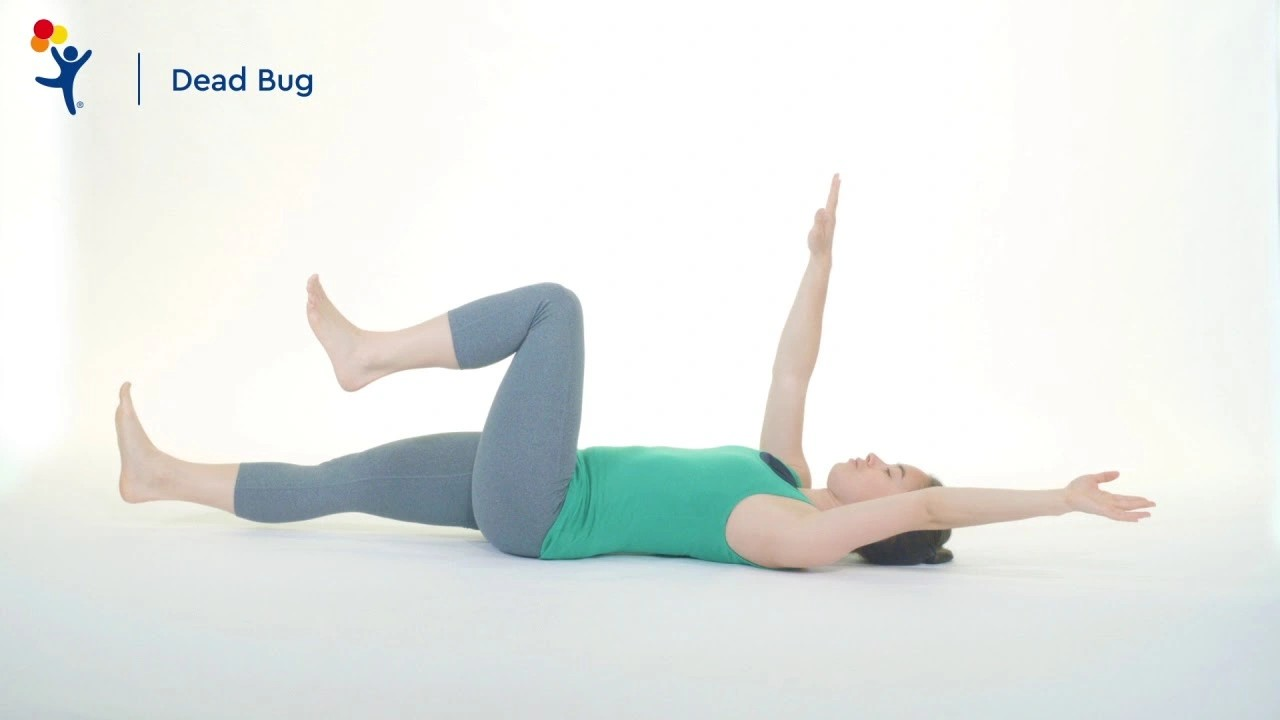
Dead Bug
Lie on the back with arms pointing toward the ceiling and hips and knees bent. In Cooper’s version, lower one arm behind you while extending the opposite leg, then return and change sides. Keep the lower back pressed against the floor, following the version described in the leaflet.[cooperhealth.org]
Check the movement description before copying a photograph. Plymouth’s rehabilitation leaflet also uses the name “dead bugs” for a bent-leg raising exercise, with a natural back position. Those are different versions. This section describes Cooper’s opposite-arm-and-leg version and does not combine the two instructions.[cooperhealth.org][plymouthhospitals.nhs.uk]
Side Plank
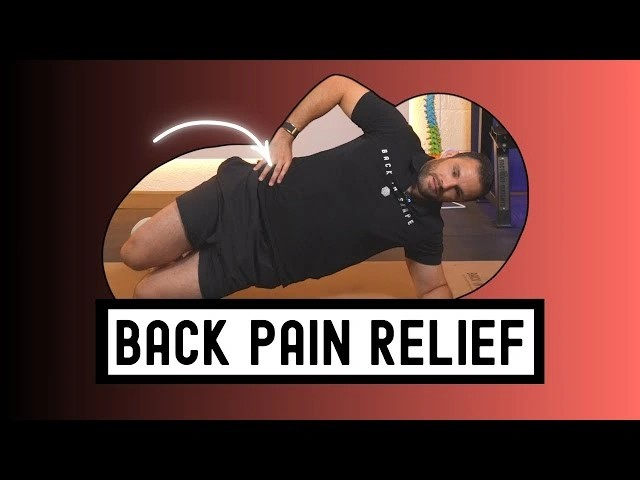
Begin on one side with the supporting elbow directly beneath the shoulder. Lift the hips into a controlled position and lower slowly. AAOS describes a modified version with the bottom leg bent; Cooper describes a version with the legs stacked.[orthoinfo.org][cooperhealth.org]
Keep the supporting elbow under the shoulder and avoid shrugging it toward the ear. Choose the version named in your plan rather than assuming a photograph of straight legs is the required starting level. These sources do not establish that side planks put no pressure on the back.[orthoinfo.org]
Cat-Cow Stretch
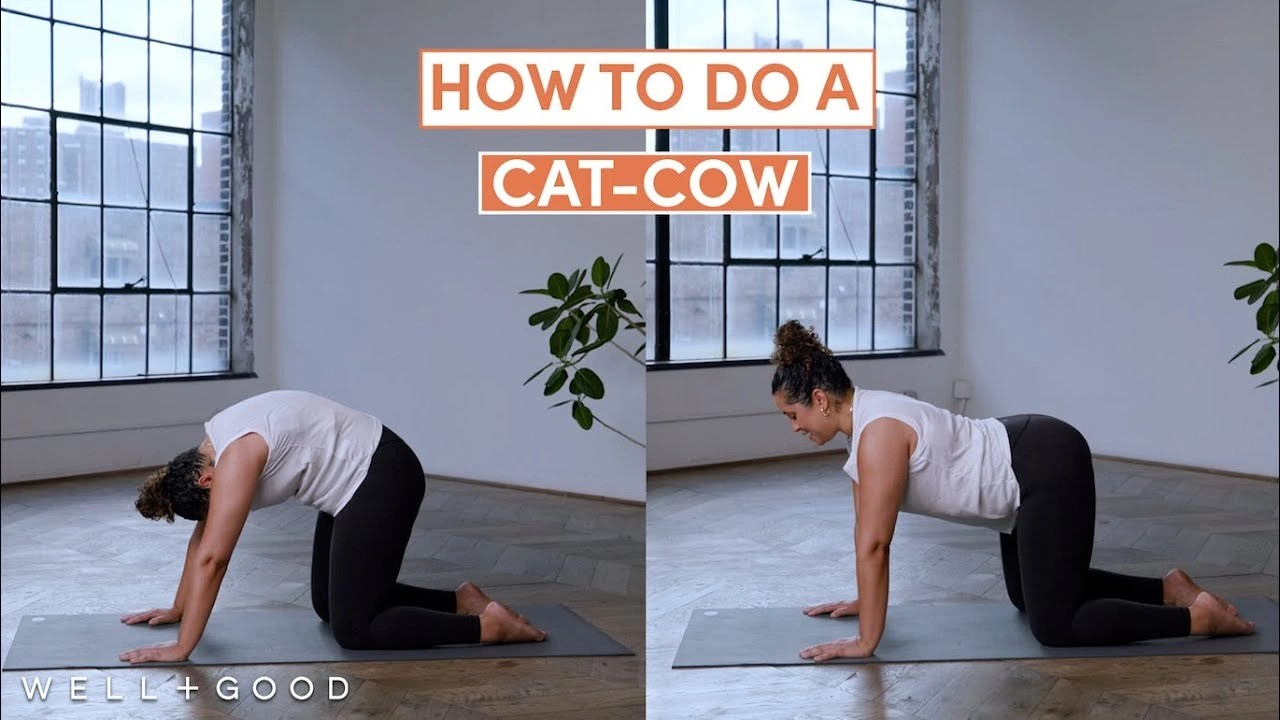
Start on hands and knees. Move slowly between rounding and arching the back, then return toward the starting position. Plymouth describes this as a cat-and-camel stretch in its back-rehabilitation booklet. Use a comfortable range rather than forcing either end position.[plymouthhospitals.nhs.uk]
This is a back-mobility movement, whereas a plank aims to hold the trunk still. The two exercises therefore have different jobs in a routine. The movement description does not establish zero joint compression or that it decompresses a disc. Use controlled movement as the goal rather than trying to create a strong unloading sensation.
Superman Exercise
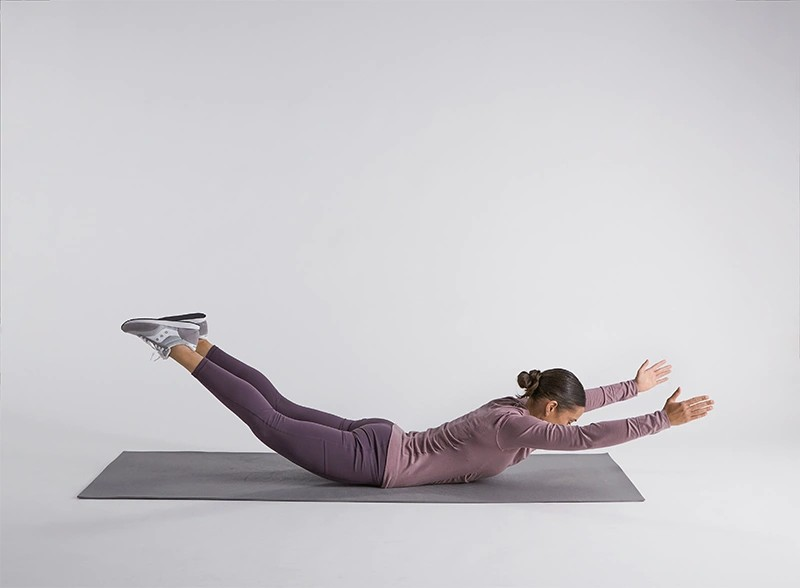
The name “superman” is used for different positions. Cooper’s alternating version starts lying face down: lift one arm and the opposite leg, then change sides. Plymouth uses the name for an opposite-arm-and-leg movement on hands and knees.[cooperhealth.org][plymouthhospitals.nhs.uk]
The original illustration may show a simultaneous prone lift. Do not use that picture to infer the dose or starting level for an alternating version. Identify whether the instructed version is prone or on all fours and which limbs move together before you use a repetition target. The cited guides do not make every version equivalent.[cooperhealth.org][plymouthhospitals.nhs.uk]
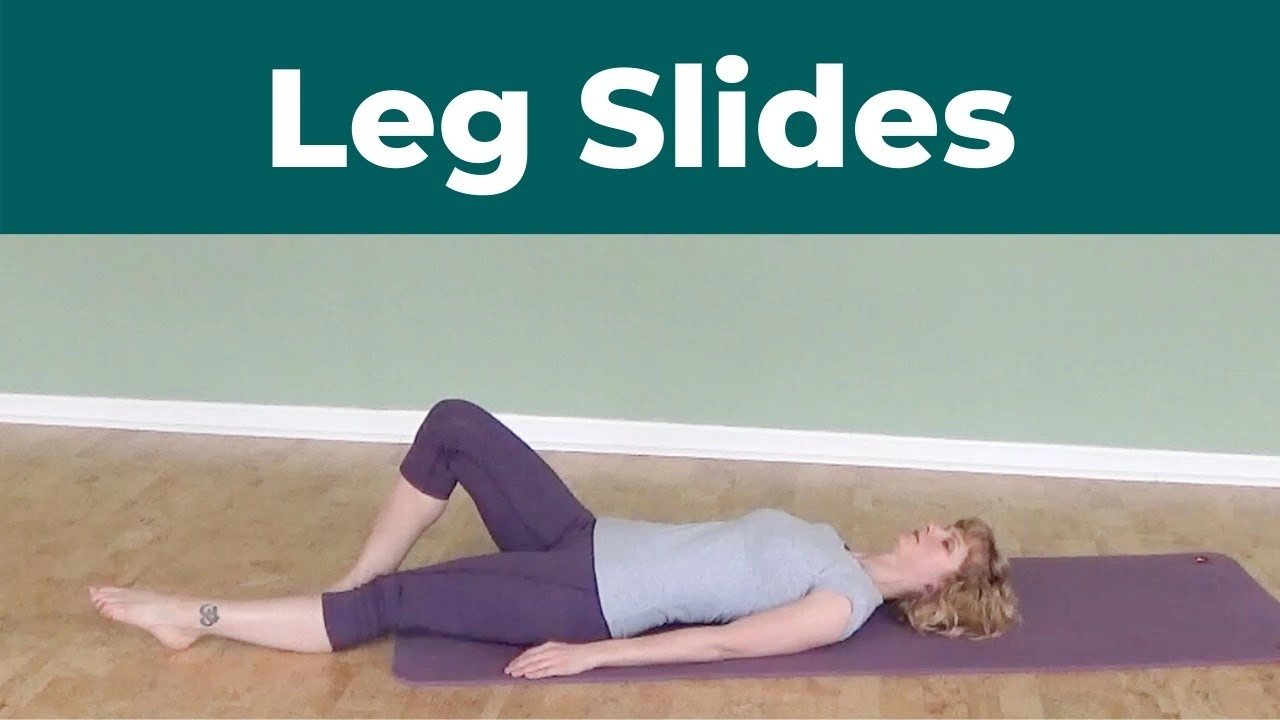
Leg Slides
For the heel-slide version in NHS Fife’s leaflet, lie on the back, bend one knee by sliding the heel toward the bottom, then straighten the leg along the surface. Repeat on the other side as comfortable. Keep the heel in contact rather than lifting the whole leg.[nhsfife.org]
Notice whether you are sliding a foot or turning the movement into a straight-leg lift. Those are different tasks. The source leaflet concerns low-back-pain flare-ups and presents gentle movement options; its heel-slide description is not evidence that this exercise alone repairs a specific injury.[nhsfife.org]
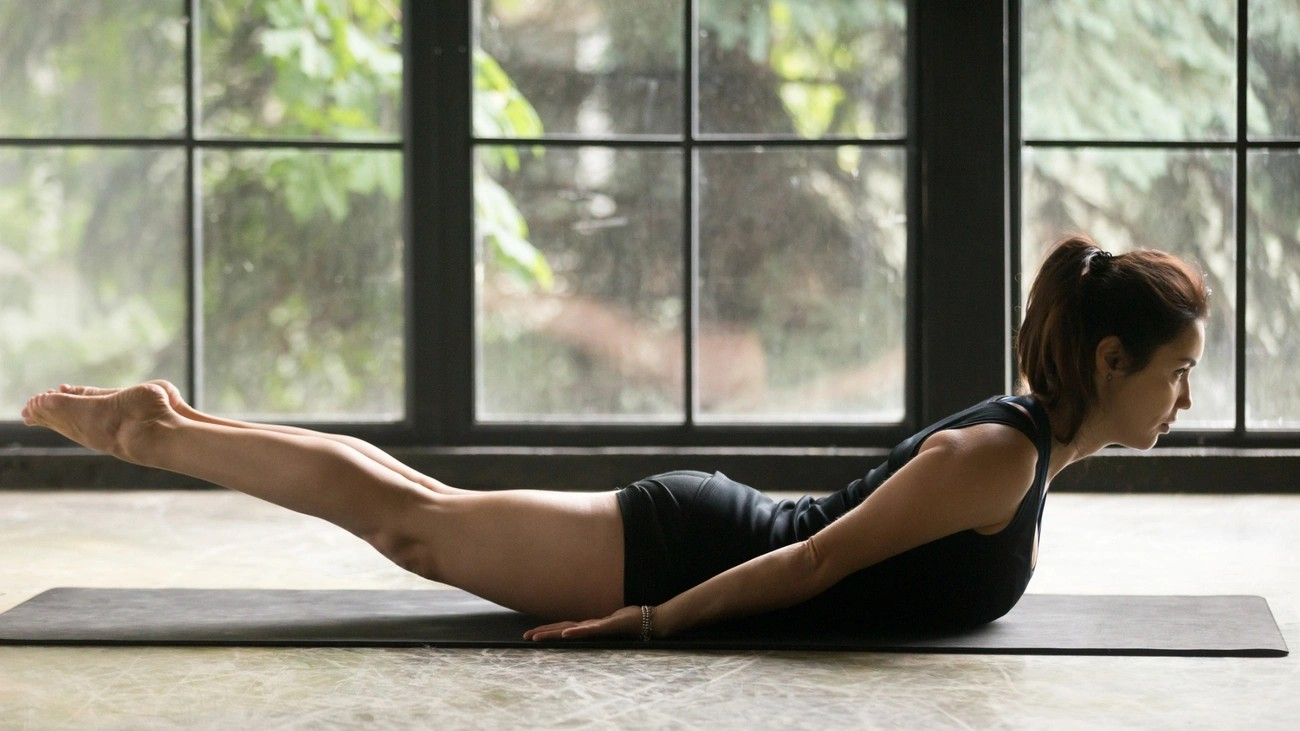
Prone Cobra
Here, prone cobra means a prone chest lift with the arms at the sides, rather than a press-up with the hands under the shoulders. A primary shoulder-muscle activation study describes its modified prone cobra with participants lying face down, arms beside the body, lifting the chest and drawing the shoulder blades downward.[PubMed Central]
Use that description to identify the variant in the illustration. The study measured immediate shoulder-muscle activity; it does not establish that a 90-second hold is a core-endurance test or that this movement prevents back injury. A long hold is therefore not prescribed here.[PubMed Central]
Conclusion
Use these core exercises to stabilize the spine as a reference for identifying movements and discussing a routine. The source programs differ in purpose and schedule. AAOS describes supervised conditioning, Cooper provides a general core routine, and NHS Fife gives flare-up management information. Do not add every source’s repetitions together.
For a useful follow-up, bring the exercise name, the exact version, the repetitions or hold you used, and the everyday task that remains difficult. Compare pain and daily function separately. A program can have different effects on those outcomes, as the Cochrane review illustrates.[PubMed]
| Movement | AAOS example | Cooper example |
|---|---|---|
| Bridge | Hold 15 seconds; five repetitions | Hold 10 seconds; ten repetitions |
| Bird dog | Hold 15 seconds; five repetitions | Hold 10 seconds; five repetitions each side |
| Plank | Hold 30 seconds; five repetitions | Build toward one minute; three repetitions |
| Side plank | Modified position; 15-second hold | Stacked legs; build toward 30 seconds or more |
Frequently Asked Questions
How do core muscles help protect the spine?
Core exercises train different tasks, including holding a position and controlling limb movement. They are part of exercise programs used for back symptoms, but a stronger core does not explain every cause of pain or guarantee injury prevention.
What are the most effective exercises for improving spine stability?
There is no single best movement for every reader. Compare the task, starting position and version. The main sections distinguish held positions, opposite-limb movements and mobility exercises, with examples from named programs.
What are Dr. Stuart McGill's Big 3 exercises for back pain prevention?
The term commonly refers to the modified curl-up, side bridge and bird dog. This article is a broader ten-exercise guide and does not label a standard plank as a substitute for that named set. Use a specific program if that is what your clinician has prescribed.
How long should I hold core stabilization exercises?
Use the hold time for the exercise version and program you are following. The comparison table shows AAOS and Cooper examples; they differ, so their numbers should not be combined into one prescription.
Can core exercises really reduce back pain?
Exercise probably improves pain in adults with chronic nonspecific low-back pain, according to the Cochrane review discussed above. The 58% figure came from a specific 40-woman pilot trial, not from testing this ten-exercise list.
References
- Acute effects of lower trapezius activation exercises on shoulder muscle activation during overhead functional tasks in symptomatic and asymptomatic adults - PMC — pmc.ncbi.nlm.nih.gov
- The effect of non-weight bearing group-exercising on females with non-specific chronic low back pain: a randomized single blind controlled pilot study. — pubmed.ncbi.nlm.nih.gov
- Exercise therapy for chronic low back pain. — pubmed.ncbi.nlm.nih.gov
- Microsoft Word - Core Exercise Examples — www.cooperhealth.org
- Issue No — www.nhsfife.org
- https://www.orthoinfo.org/bodypart/back/spine-conditioning-program
- https://www.plymouthhospitals.nhs.uk/display-pil/pil-back-rehabilitation-programme-3972