Remote Health Monitoring: How It Works and Why It Matters for Your Care
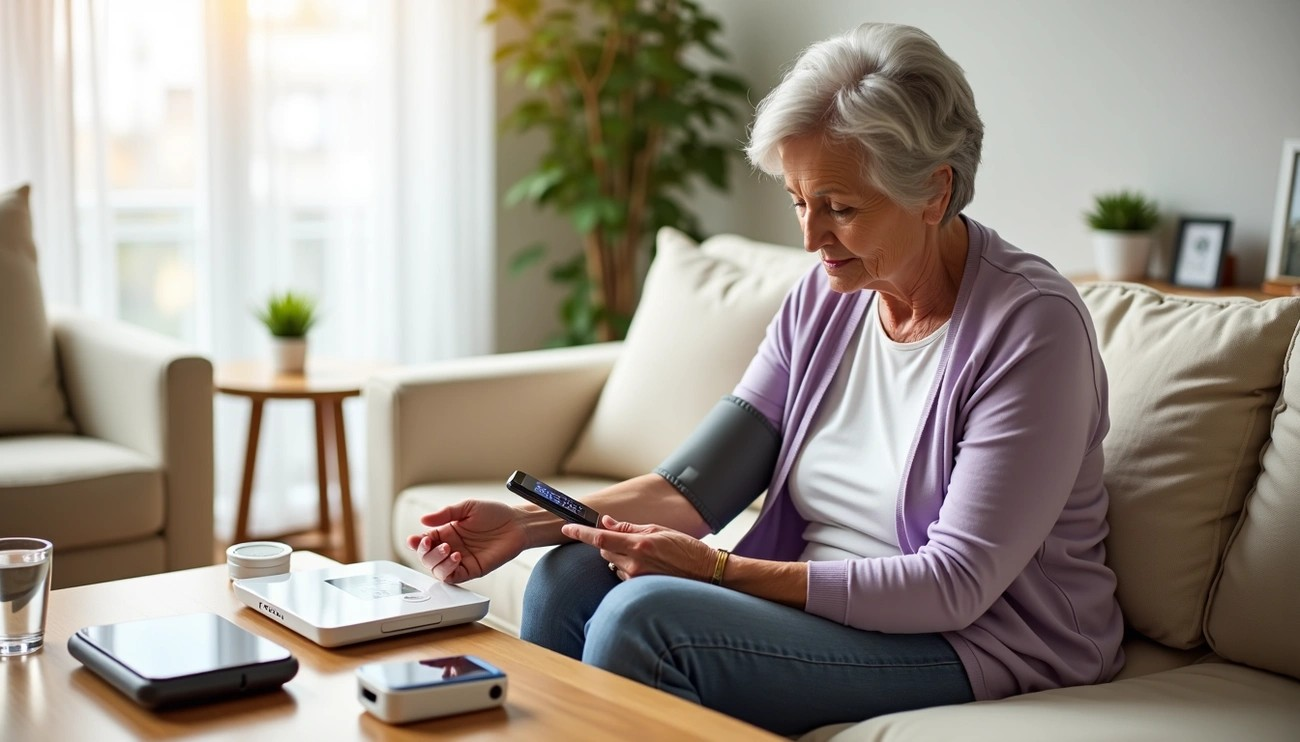
What is remote health monitoring
Definition and simple concept Remote health monitoring uses digital devices to track your health data outside traditional clinical settings. You collect measurements at home using internet-connected medical devices. This information automatically transmits to your healthcare provider for review and management [1]. The process works through a coordinated system of home-based or mobile monitoring devices that capture vital sign data or information about your daily activities [1]. Your provider then reviews this data to monitor your condition and adjust treatments when needed. They can also intervene if readings fall outside desired boundaries [1]. What makes remote patient monitoring devices different from regular health tracking is the medical-grade quality and automatic transmission. These devices must meet FDA definitions for medical devices and digitally upload data without you having to manually enter anything [1]. Think of it as having a direct data pipeline between your home and your doctor's office. Remote health monitoring services work for chronic conditions you manage long-term. They also work for acute conditions that need temporary monitoring. Whether you're tracking blood pressure for heart disease or monitoring glucose levels for diabetes, the same technology lets your care team stay connected with your health status between office visits [2].
Remote patient monitoring vs telehealth Many people use the terms interchangeably. Remote patient monitoring is a subset of telehealth, not a synonym [1]. This difference matters because the two services work differently and serve different purposes in your care. Telehealth acts as an umbrella term covering the use of telecommunications and information technology to provide health assessment, diagnosis, intervention, and consultation across distance [1]. Remote patient monitoring falls under this umbrella but represents just one approach. The key differences come down to how you interact with your provider. Remote patient monitoring focuses on collecting and transmitting objective physiological data like blood pressure or glucose levels from your home to your care team [3]. This happens asynchronously, meaning your provider reviews the data later rather than in real-time [3]. Telehealth appointments work differently. They involve synchronous, real-time virtual visits where you speak directly with your provider through video or phone [3]. These are scheduled appointments with face-to-face interaction, even if that interaction happens through a screen [3]. Remote health monitoring devices require medical-grade equipment that connects to the internet. Telehealth may only need a phone or computer [3]. RPM provides ongoing monitoring with daily or weekly readings. Telehealth delivers care through scheduled virtual encounters [3]. Both services offer value, but they serve different needs. Telehealth works well for consultations and diagnoses. RPM excels at continuous observation through biometric data for conditions that need regular tracking [4].
Key components of remote monitoring systems Remote monitoring systems operate through three main components that work together to deliver care [1]. Education and setup forms the foundation. You receive training on how to use your devices and transmit health data properly. This ensures you collect accurate readings that your provider can rely on for treatment decisions [1]. Device supply and data collection represents the second component. You use internet-connected devices that collect and transmit readings automatically. These devices must capture at least 16 readings every 30 days to provide sufficient data for informed clinical decisions [1]. Without adequate readings, your provider lacks the information needed to manage your condition. Treatment and management completes the system. Your healthcare team reviews the transmitted data and uses it to manage your condition remotely [1]. This might mean adjusting medications or recommending lifestyle changes. They may also schedule an in-person visit if readings show concerning trends. Medicare covers each component separately and recognizes that all three parts work together to deliver effective remote health monitoring services [1]. The system depends on this coordinated approach, where technology, patient engagement, and clinical expertise combine to extend care beyond the clinic walls.
How remote health monitoring works
Step 1: Device setup and patient enrollment Your healthcare provider selects devices based on your specific health condition. Diabetes patients receive a glucose meter. Hypertension calls for a blood pressure monitor. Heart conditions might require rate trackers [1]. This targeted approach means you use equipment relevant to your care needs only. Devices arrive at your home pre-configured and ready to use out of the box once selected [1]. You won't need to connect them to WiFi or configure settings yourself. The internet-connected smart devices require no technical setup on your end [1]. Your care team provides clear instructions on proper use. This training often has video guides or in-person demonstrations that build your confidence with the technology [1]. You'll learn when to take readings, how to position devices and what to do if something doesn't work as expected. Incorrect device use can lead to false readings, so this education step protects against clinical misdiagnosis [5].
Step 2: Data collection and transmission Data collection happens either continuously or at regular intervals depending on your device. A wearable heart rate monitor might track information 24/7 and provide a complete picture of your cardiovascular health [1]. A blood pressure cuff requires you to take readings at specific times during the day, conversely [1]. Some devices allow you to log additional information through mobile apps. You might record pain levels or sleep quality with your biometric readings and create a fuller health picture [1]. Transmission occurs through secure encrypted channels that protect your sensitive health information during transfer [1]. The devices use cellular chips with 4G connectivity and send data from your home to the cloud autonomously [1]. This automatic process maintains HIPAA compliance and keeps your information safe. Your healthcare team can access all transmitted data that gets stored on secure servers [1]. Many systems merge this information into your electronic health record and eliminate the need for duplicate data entry while optimizing the process [1].
Step 3: Healthcare provider review and analysis Your provider accesses your health metrics through centralized dashboards that display information in charts and graphs [1]. These visual formats make it easier to spot trends and identify potential concerns quickly. Advanced systems use artificial intelligence to analyze data patterns and detect risks [1]. An AI algorithm might flag an upward trend in your blood pressure before it reaches crisis levels and signal the need for intervention [1]. Alert systems operate in different modes. Clinical staff respond following system notifications about abnormal conditions in alert-driven monitoring [5]. The clinical team calls you to determine if the situation needs immediate escalation to your ordering provider when you have a critical reading [1]. At-risk readings get reviewed to see if they're typical for you or if a phone call is warranted [1]. Staff check your data according to set timeframes rather than waiting for alerts in scheduled monitoring mode, alternatively [5]. Both approaches help providers customize thresholds based on clinical guidelines or your individual needs [1].
Step 4: Patient communication and care adjustments Your healthcare team reaches out with guidance based on what the readings reveal after reviewing your data. These interactions often happen through virtual consultations where you discuss the data and its implications together [1]. Your provider might recommend medication adjustments after observing trends in your readings. Heart rate data showing concerning patterns could lead to dosage changes, for example [1]. You could receive advice on lifestyle modifications, preventive measures or scheduling an in-person appointment if readings show something that requires closer examination [1]. The clinical team documents all patient interactions with automatic time stamps and creates a record of your care [1]. Phone calls with patients and providers happen on secure recorded platforms to maintain quality and compliance [1]. Automated reminder systems supplement live communication. You'll receive text message prompts to take your readings if you miss scheduled measurements [1]. This combination of human contact and automated support keeps you engaged with your monitoring routine and adherent to your care plan.
Remote health monitoring devices you might use
Blood pressure monitors Blood pressure cuffs are the foundations of remote hypertension management. Current remote blood pressure monitoring devices include upper-arm electronic automatic devices (wired or wireless), smartphone applications with external wireless blood pressure monitors, smartphones acting as sleeveless blood pressure monitors, smart watches, smart bracelets, and finger photoplethysmography [6]. These monitors transmit data via smartphones, home centers, smart boxes, tablets, desktop computers, or laptops [6]. Your blood pressure results send to mobile terminal devices or computer storage centers where monitoring data can be observed and assessed live [6]. Remote interventions can be given to you at the same time, including medication adjustment and health guidance [6]. Home blood pressure monitoring detects white coat hypertension and masked hypertension while it assesses baseline blood pressure levels [6]. White coat hypertension occurs when your blood pressure readings are higher during in-person practice visits than they are at home due to the stress of meeting with a practitioner [1]. Masked hypertension represents the opposite scenario. Your blood pressure is normal at the doctor's office but elevated at home [1]. Nearly 700,000 U.S. deaths in 2023 included high blood pressure as a primary or contributing cause [1], so accurate monitoring matters. Many devices appear on the U.S. Blood Pressure Validated Device Listing, which means they've undergone independent review to confirm clinical accuracy [7].
Weight scales Remote weight monitoring uses cellular-connected scales that transmit readings without requiring WiFi, apps, or Bluetooth pairing [5]. A sudden weight gain of even just a few pounds may indicate the condition is worsening for patients with congestive heart failure. This prompts providers to adjust medications, prescribe a diuretic, or arrange a visit [1]. The scales feature high-precision sensors with accuracy up to 0.2kg and measure weight up to 400 lbs [8]. They turn on with a tap and turn off after use [5]. Battery life lasts 6-12 months on standard AA batteries [5]. Weight monitoring addresses a most important health challenge. About 40% of the American population was obese during August 2021-August 2023 [1]. Obesity-related conditions include heart disease, stroke, type 2 diabetes, and certain types of preventable cancer [1]. The scales also track unexpected rapid weight loss, which can indicate weakened bones, compromised immune system, dehydration, and fatigue [1].
Blood glucose meters Blood glucose meters test your blood sugar through a small drop of blood placed on a test strip connected to the device [1]. The reading transmits live to your provider for review [1]. Monitoring blood glucose levels is critical to their safety for diabetics [1]. Continuous glucose monitors (CGMs) represent a newer technology that attaches to your stomach or arm. They use a tiny plastic tube to monitor glucose levels from interstitial fluid just below your skin [9]. Unlike traditional monitors requiring fingersticks, CGMs provide results that update every few minutes [9]. Your CGM shares results with your healthcare team and allows closer monitoring and more effective medication management [9]. Studies showed that 70% of high-risk diabetic patients were able to lower their A1C levels by using remote patient monitoring devices [1].
Pulse oximeters Pulse oximeters attach to your fingertip to measure blood oxygen saturation (SpO2) and pulse rate [1]. These measurements are valuable to manage chronic respiratory conditions such as asthma, chronic obstructive pulmonary disease, and to monitor COVID-19 patients [1]. Peripheral blood oxygen saturation is a critical indicator of deterioration in patients with COVID-19 [10]. Different SpO2 thresholds trigger care escalation, with 92% or less being common [10]. Patients receive training to self-measure their SpO2 in all monitoring models [10]. Two categories exist: prescription use and over-the-counter [11]. Prescription pulse oximeters undergo FDA clinical testing and receive 510(k) clearance [11]. Over-the-counter pulse oximeters, sold to consumers, do not undergo FDA clearance review and should not be used for medical purposes [11].
Other specialized monitoring devices Spirometers measure lung function by tracking the volume and flow of air you can inhale or exhale [1]. They play a role in diagnosing lung diseases and monitoring conditions such as asthma and COPD [1]. Thermometers allow providers to detect fever symptoms quickly to catch dangerous escalations like sepsis in patients with compromised immune systems [1]. Peak flow monitors measure how fast air comes out of your lungs when you exhale with force [1]. Dynamometers measure grip strength and work well to monitor arthritis [1].
Benefits of remote patient monitoring for your care
Better access to your healthcare team Continuous monitoring creates a direct line between you and your care team that didn't exist before. Your providers can observe changes in your condition throughout the week rather than relying on information gathered during brief office visits [12]. Clinicians can identify deterioration earlier and provide prompt care with this ongoing visibility [12]. The connection strengthens your relationship with providers through more communication opportunities [6]. You get the comforting perception that your provider watches over you [6]. Healthcare practitioners can view valuable symptom information that you might not report during visits [12]. Remote monitoring also captures a more realistic view of certain vitals, such as blood pressure readings that might be elevated only during clinic visits [12].
Fewer trips to the doctor's office Remote health monitoring services substantially reduce the need for appointments. Studies in epilepsy clinics showed reductions of up to 48% in outpatient appointments [7]. A pilot program at nursing homes resulted in an 18% reduction in hospital admissions, a 9% reduction in hospital readmissions, and a 12% reduction in ambulance trips [13]. You avoid the expenses that come with travel, parking, childcare, and taking time off work [6]. Remote patient monitoring devices provide high-quality care in an available way for patients with mobility issues or those living in remote areas [14]. The benefits of remote patient monitoring include maintaining care quality while eliminating unnecessary check-ups when your condition remains stable [7].
Early detection of health changes Continuous monitoring identifies more patients developing complications than intermittent monitoring [15]. The technology makes timely and effective interventions possible that improve patient outcomes and reduce healthcare costs [15]. Remote health monitoring devices can detect deviations from your established thresholds and emerging patterns suggesting potential health decline [5]. Complications, hospital readmissions, and worse outcomes can be prevented with early intervention [5]. A study of heart failure patients found that remote patient monitoring programs reduced hospitalizations by 25% [8]. Results showed 87% fewer hospitalizations and 77% fewer deaths for COVID-19 patients monitored remotely after discharge [16].
Improved management of chronic conditions Remote monitoring proves especially effective when you have conditions like hypertension, heart failure, and COPD [17]. Patients with hypertension alone saw an average blood pressure reduction of nearly 10 mm Hg, while those managing additional chronic diseases still achieved reductions of 6.6 mm Hg [18]. The technology permits early detection of disease warning signs for conditions such as diabetes and chronic obstructive pulmonary disease [19]. 70% of high-risk diabetic patients were able to lower their A1C levels using remote patient monitoring devices [16].
More control over your personal health Access to your own health data increases your involvement in self-management [12]. You become more educated about your disease and gain perceived control [12]. 89% of patients agreed the remote monitoring program helped them feel comfortable managing their condition at home in surveys, and 93% said they would recommend remote patient monitoring to people with similar conditions [16]. Remote health monitoring services enable you to take an active role in your healthcare experience from home [14]. You receive timely feedback and interventions, which reduces the likelihood of health deteriorations that lead to emergency room visits [14].
Common conditions managed with remote monitoring
Heart disease and hypertension Uncontrolled hypertension remains the most prevalent reversible risk factor for cardiovascular disease. Remote health monitoring services address this through consistent home monitoring that captures readings outside clinical settings. The approach delivered substantial improvements in blood pressure control and increased home monitoring engagement [20]. Studies show measurable outcomes. A remote clinical management program adapted for hypertension showed patients achieved an average blood pressure reduction of nearly 10 mm Hg [20]. Analysis of almost half a million blood pressure readings revealed that both blood pressure and cholesterol levels were lowered during remote monitoring programs [9].
Diabetes management Remote patient monitoring devices prove especially valuable for diabetes care. A meta-analysis found that remote monitoring programs reduce HbA1c levels by 0.55 compared with usual care [21]. Similarly, 70% of high-risk diabetic patients were able to lower their A1C levels through remote monitoring [22]. The economic effect matters. One hospital's avoidable admissions rate related to diabetic complications was 50% higher than other regional hospitals before implementing remote monitoring [21]. The estimated annual cost of diagnosed diabetes in the United States reaches USD 327 billion [22], and hospital inpatient care accounts for 30% of total medical costs [22].
Respiratory conditions like COPD and asthma COPD was responsible for 3.23 million deaths worldwide in 2019 and has become the third-leading cause of death [10]. The global estimated prevalence is 11.7% [10]. Hospitalizations contribute USD 50 billion to COPD costs in the United States alone [10]. Remote monitoring detects exacerbations early. Studies found that average respiratory rate increased as early as 5 days before hospitalization [10]. A 2023 study showed that remote monitoring recipients experienced fewer unplanned hospitalizations compared with usual care [10]. Remote monitoring of inhaled bronchodilator use led to improved control for asthma management. Participants began receiving email reports about their inhaler use, and average ACT scores increased 1.40 points for each subsequent month [11]. By the study period's end, 75% of participants had controlled asthma compared with 38% at entry [11]. A separate analysis showed 99.1% patient adherence with early detection of underlying respiratory conditions [23].
Post-surgical recovery monitoring Remote monitoring improves recovery following cancer surgery. Patients in remote monitoring programs showed a 6% greater functional recovery rate by day 14 following surgery and fewer major complications [24]. Two weeks later, patients who received care via remote monitoring took more steps each day [25]. Three months later, these patients had less severe symptoms and reported that symptoms had less effect on their daily activities [25].
What to expect when starting remote health monitoring services
Setting up your devices Monitoring equipment arrives within 5 days of enrollment [1]. Your care team provides setup instructions by telephone at first [1]. About 20% of patients need a home visit to complete equipment setup [1]. Your provider or care coordinator walks you through proper device use during this training phase.
How often you'll take measurements Measurement frequency depends on your risk level. High-risk patients take vital signs two to four times daily [26]. You need at least 16 readings every 30 days to meet requirements [27]. Your care coordinator calls and sends text reminders if you miss a scheduled measurement [1]. Patients who report zero measurements for two consecutive months get disenrolled from the program [1].
Understanding alerts and when to contact your doctor Automated alerts notify nurses whenever your vital sign parameters fall out of range or trend adversely [26]. The care coordinator contacts you by phone or text and asks you to recheck the measurement [1]. Your healthcare provider gets notified using a provider-specific communication protocol if it remains out of range [1]. Nurses may connect via video to perform visual assessments and determine if escalation to physicians is needed [26].
Privacy and data security Your data transmits through encrypted channels that comply with HIPAA regulations [28]. Electronic Protected Health Information gets encrypted during both transmission and storage to prevent unauthorized access [12]. Access controls ensure only authorized personnel can view your data [12].
Conclusion
Remote health monitoring revolutionizes how you manage your health. It extends your care team's reach into your home. The technology provides continuous oversight that catches problems early and reduces trips to the clinic. You gain greater control over chronic conditions like diabetes and hypertension. The process is simple. You receive medical-grade devices and take regular readings. Your provider reviews the data and adjusts your treatment when needed. You also gain peace of mind knowing someone monitors your health between appointments. Remote health monitoring represents a practical approach to modern healthcare. Talk with your provider about whether these services fit your health needs. Start building a stronger connection with your care team today.
FAQs
Q1. Does Medicare cover remote patient monitoring services? Yes, Medicare covers remote patient monitoring. The program reimburses for three main components: patient education and device setup, the supply of internet-connected devices and data collection (requiring at least 16 readings per 30 days), and the treatment and management services provided by your healthcare team based on the transmitted data. Q2. How does the remote monitoring process work from start to finish? Remote monitoring works through four main steps: First, you receive pre-configured devices and training on proper use. Second, the devices automatically collect and transmit your health data through secure encrypted channels. Third, your healthcare provider reviews the data through dashboards and AI-powered analysis systems. Finally, your care team contacts you with guidance, medication adjustments, or recommendations based on your readings. Q3. What are the main limitations of remote patient monitoring? The primary disadvantage is its dependence on technology and reliable internet connectivity. Not all patients can afford the necessary equipment or have access to broadband internet, which can create barriers to participation. Additionally, about 20% of patients require in-person home visits to complete the initial equipment setup. Q4. What kind of return on investment does remote patient monitoring provide? Studies show an average ROI of 22.2% when patient compliance reaches 55%. The ROI can range from -11.1% to 93.3% per patient depending on factors like program costs, data review expenses, insurance reimbursement rates, and patient compliance levels. The financial benefits are most influenced by data review costs and patient adherence to the monitoring schedule. Q5. Can remote monitoring help reduce hospital visits and readmissions? Yes, remote monitoring significantly reduces healthcare facility visits. Studies have shown up to 48% reduction in outpatient appointments, 18% reduction in hospital admissions, and 25% reduction in hospitalizations for heart failure patients. For COVID-19 patients monitored remotely after discharge, results showed 87% fewer hospitalizations and 77% fewer deaths.
References
[1] - https://pmc.ncbi.nlm.nih.gov/articles/PMC10440637/ [2] - https://telehealth.hhs.gov/providers/best-practice-guides/telehealth-and-remote-patient-monitoring [3] - https://carelife.md/medicares-remote-patient-monitoring-vs-telehealth-whats-the-difference/ [4] - https://candihealth.com/telehealth-vs-rpm-whats-the-difference/ [5] - https://www.actuvi.com/blog/early-detection-of-patient-deterioration-the-role-of-continuous-remote-monitoring-in-preventative-health [6] - https://www.healthrecoverysolutions.com/blog/the-top-13-benefits-of-remote-patient-monitoring [7] - https://www.medicaleconomics.com/view/does-remote-patient-monitoring-reduce-outpatient-appointments- [8] - https://www.meegle.com/en_us/topics/remote-patient-monitoring/remote-patient-monitoring-for-healthcare-patient-empowerment [9] - https://www.massgeneralbrigham.org/en/about/newsroom/articles/remote-blood-pressure-monitoring [10] - https://pmc.ncbi.nlm.nih.gov/articles/PMC10470466/ [11] - https://respiratory-therapy.com/disorders-diseases/chronic-pulmonary-disorders/asthma/remote-monitoring-of-inhaled-bronchodilator-use-improved-asthma-control/ [12] - https://ccrps.org/clinical-research-blog/remote-monitoring-safe-data-security-in-healthcare-devices [13] - https://www.mcknights.com/news/remote-monitoring-technology-reduces-hospital-doctor-visits/ [14] - https://timedochealth.com/remote-patient-monitoring-benefits-for-patients-providers/ [15] - https://pmc.ncbi.nlm.nih.gov/articles/PMC11780298/ [16] - https://www.oracle.com/health/remote-patient-monitoring/ [17] - https://psnet.ahrq.gov/perspective/remote-patient-monitoring [18] - https://www.ajmc.com/view/remote-patient-monitoring-shows-potential-for-managing-complex-chronic-disease [19] - https://pmc.ncbi.nlm.nih.gov/articles/PMC8734917/ [20] - https://www.ahajournals.org/doi/10.1161/JAHA.122.027296 [21] - https://www.ama-assn.org/practice-management/digital-health/telehealth-scenario-remote-patient-monitoring-rpm-diabetes [22] - https://www.tenovi.com/remote-patient-monitoring-diabetes/ [23] - https://www.healtharc.io/blogs/remote-patient-monitoring-rpm-for-respiratory-pulmonary-diseases/ [24] - https://news.med.miami.edu/remote-monitoring-improves-recovery-from-cancer-surgery/ [25] - https://www.pcori.org/research-results/2020/does-adding-remote-monitoring-standard-postoperative-care-help-improve-recovery-after-surgery-among-patients-cancer [26] - https://www.mayoclinichealthsystem.org/hometown-health/speaking-of-health/remote-patient-monitoring-comprehensive-care-at-home [27] - https://www.cms.gov/medicare/coverage/telehealth/remote-patient-monitoring [28] -https://rpmhealthcare.com/10-common-questions-patients-have-about-remote-patient-monitoring/