Meet our Doctor

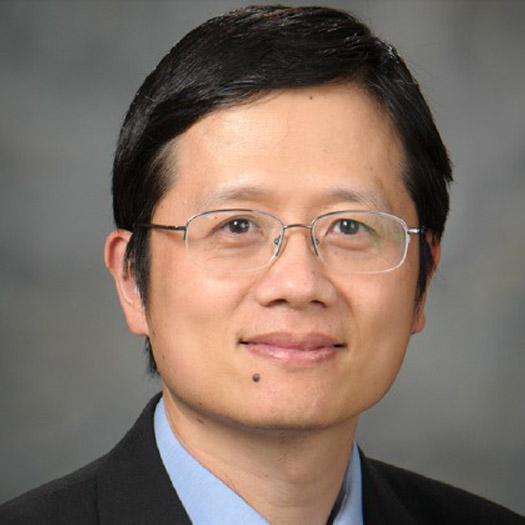
Dr. Y. Michael Li, M.D., Ph.D.

Neurosurgeon

Dr. Yan Michael Li is an award-winning, fellowship-trained spine and tumor neurosurgeon specializing in complex spine disease and brain & spine tumors. His clinical focus includes minimally invasive spine surgery, computer-assisted navigation, and robotic-assisted techniques when appropriate for patient anatomy and goals.

Dr. Y. Michael Li, M.D., Ph.D.

About Dr. Li

Dr. Yan Michael Li is an award-winning fellowship-trained spine and tumor neurosurgeon who specializes in the treatment of complex spine diseases and brain & spine tumor. Dr. Li has strong clinical interest in simple and complex spine surgery, minimally invasive spinal surgery, and computer-assisted spinal navigation and robotic surgery. Dr. Li’s clinical focus includes all aspects of spinal surgery such as including herniated disk disease with nerve compression, degenerative spine stenosis, complex spine tumor, trauma and deformity diseases. Dr. Li provides the latest and most efficient treatment options for each patient with back pain, including minimally invasive herniated disk surgery through less than one inch incision, minimally invasive lateral or posterior spinal fusion surgery, artificial disc implants that allow for more mobility.

He has a reputation as an expert in complex spinal surgery, with more than 50 percent of his referrals originating from other surgeons who relied on him for revision surgeries or complex spine cases that were outside their realm of expertise. In order to achieve the very best in patient outcomes, Dr. Li’s practice emphasizes an interdisciplinary approach to disease processes and he works very closely with other specialists such as pain specialists, neurologists and physical therapists.

Dr. Li treats patients with brain and spine tumor, including gliomas, meningioma, metastatic disease, skull base lesions. He employs advanced awake mapping, imaging techniques, intraoperative navigation and microsurgery to ensure maximal tumor removal and achieve the safest possible surgical outcomes. Dr. Li has advanced training in some of the most leading-edge technologies available, allowing him to provide the latest, most efficient options for each patient. These technologies include minimally invasive and endoscopic surgery for spine, brain and skull base tumors, advanced laser surgery for brain and metastatic spine tumor, primary spine tumor en bloc resection, stereotactic radiosurgery. Furthermore, Dr. Li works with a multi-disciplinary team to ensure that the best possible treatment strategies are offered to his patients and individualized treatments for brain and spine tumors based on personal genomic profiling.

Dr. Li received his medical degree from Peking Union Medical College and his PhD from University of Texas MD Anderson Cancer Center. He then completed neurosurgical residency and enfolded complex spine fellowship at State University of New York, fellowships at Dana Farber Cancer Center Boston Children Hospital and Brigham and Women’s Hospital Harvard Medical School, as well as a Neurosurgical Oncology fellowship at University of Texas MD Anderson Cancer Center focusing complex brain and spine tumor surgery.

Dr. Li has authored 76 scholarly articles in peer-reviewed journals and book chapters such as Nature Medicine, Cancer Cell, Journal of Neurosurgery, Neurosurgery, Spine, Journal of Spine, Clinical Spine Surgery, JAMA Oncology, Cancer Research, Journal of Neuro-Oncology, Global Spine Journal, World Neurosurgery, Clinical Neuroscience et al. He has received Bittner Award on Brain Tumor Research from American Association of Neurological Surgeons and awards from the Department of Defense Cancer Research Program, and his patent of nanoparticle gene therapy has been adopted in NCI Clinical Trial.

He is currently performing research focused on maximal safe resection of brain and spine tumor, surgical outcome study for complex brain and spine surgery, cancer specific brain and spine tumor targeted therapy and local delivery.
What Programs has Dr. Li taken?

  • Minimally Invasive & Complex Spine Program
  • Comprehensive Brain & Spine Tumor Program

What sets Dr. Li apart from other surgeons?

  • Master Expert in Minimally Invasive and complex spine surgery
  • Performs less than 1-inch incision. (Images available upon request)
  • Robotic and Navigated “GPS” precision spine surgery
  • Laser spine surgery for Rhizotomy & Diskectomy
  • Endoscopic foramitomy and diskectomy for nerve decompression
  • Non-fusion artificial disc replacement
  • Revision surgery with less than half chances to get another surgery compared to routine spine revision
  • Currently Clinical Assistant Professor at MD Anderson and SUNY
  • Previous faculty at University of Rochester
  • 15-year level one University trauma center experience and thousands of complex and revision spine experience
  • National leader for Minimally Invasive Spine Surgery with excellent skill and outcome
  • 76 peer-reviewed papers published on spine and neurosurgery. Presented and lectured in many national and international conferences
  • Half of Dr. Li’s referrals originating from other surgeons for revision surgeries or complex spine cases that were outside their realm of expertise
  • Dozens of Dr. Li’s patients actually are physicians or health professionals

PUBLICATIONS:

76 peer-reviewed publications in Nature Medicine, JAMA Oncology, Cancer Cell, J. Neurosurgery, Neurosurgery, Spine, Clinical Spine Surgery, Cancer Research, Journal of Neuro-Oncology, Global Spine Journal, World Neurosurgery, and other leading journals.

Research highlights

A. Articles in Peer-Reviewed Journals:

  1. Towner JE, Li YI, Singla A, Moquin R, Li YM. Retrospective Review of Revision Surgery After Image-guided Instrumented Spinal Surgery Compared With Traditional Instrumented Spinal Surgery. Clin Spine Surg. 2020 Aug;33(7):E317-E321.
  2. Towner JE, Li YI, Pieters TA, Li YM. Descriptive Analysis of 1972 Cervical Corpectomy Patients and 30-Day Postoperative Outcomes. Int J Spine Surg. 2020 Jun;14(3):412-417.
  3. Li YM, Frisch RF, Huang Z, Towner JE, Li YI, Edsall AL, Ledonio C. Comparative Effectiveness of Laterally Placed Expandable versus Static Interbody Spacers: A 1-Year Follow-Up Radiographic and Clinical Outcomes Study. Asian Spine J. 2020 Jun 12;.
  4. Li YI, Ventura N, Towner JE, Li K, Roberts DE, Li YM. Risk factors and associated complications with unplanned intubation in patients with craniotomy for brain tumor. J Clin Neurosci. 2020 Mar;73:37-41.
  5. Piper K, Zou L, Li D, Underberg D, Towner J, Chowdhry AK, Li YM. Surgical Management and Adjuvant Therapy for Patients With Neurological Deficits From Vertebral Hemangiomas: A Meta-Analysis. Spine (Phila Pa 1976). 2020 Jan 15;45(2):E99-E110.
  6. Liu X, Tian W, Kolar B, Johnson MD, Milano MT, Jiang H, Lin S, Li D, Mohile NA, Li YM, Walter KA, Ekholm S, Wang HZ. The correlation of fractional anisotropy parameters with Ki-67 index, and the clinical implication in grading of non-enhancing gliomas and neuronal-glial tumors. Magn Reson Imaging. 2020 Jan;65:129-135.
  7. Mahon BZ, Mead JA, Chernoff BL, Sims MH, Garcea FE, Prentiss E, Belkhir R, Haber SJ, Gannon SB, Erickson S, Wright KA, Schmidt MZ, Paulzak A, Milano VC, Paul DA, Foxx K, Tivarus M, Nadler JW, Behr JM, Smith SO, Li YM, Walter K, Pilcher WH. Translational Brain Mapping at the University of Rochester Medical Center: Preserving the Mind Through Personalized Brain Mapping. J Vis Exp. 2019 Aug 12;(150).
  8. Huang JF, Chen D, Sang CM, Zheng XQ, Lin JL, Lin Y, Ni WF, Wang XY, Li YM, Wu AM. Nomogram for Individualized Prediction and Prognostic Factors for Survival in Patients with Primary Spinal Chordoma: A Population-Based Longitudinal Cohort Study. World Neurosurg. 2019 Aug;128:e603-e614.
  9. Garcea FE, Almeida J, Sims MH, Nunno A, Meyers SP, Li YM, Walter K, Pilcher WH, Mahon BZ. Domain-Specific Diaschisis: Lesions to Parietal Action Areas Modulate Neural Responses to Tools in the Ventral Stream. Cereb Cortex. 2019 Jul 5;29(7):3168-3181.
  10. Pieters TA, Li YI, Towner JE, Schmidt T, Vates GE, Pilcher W, Li YM. Comparative Analysis of Decompression Versus Decompression and Fusion for Surgical Management of Lumbar Spondylolisthesis. World Neurosurg. 2019 May;125:e1183-e1188.
  11. Nunno A, Li Y, Pieters TA, Towner JE, Schmidt T, Shi M, Walter K, Li YM. Risk Factors and Associated Complications of Symptomatic Venous Thromboembolism in Patients with Craniotomy for Meningioma. World Neurosurg. 2019 Feb;122:e1505-e1510.
  12. Chen D, Shao MM, Wang XY, Li YM, Wu AM. Current strategies of reduce the rate of dysphagia and dysphonia after anterior cervical spine surgery and role of corticosteroids. Ann Transl Med. 2018 Dec;6(Suppl 2):S99.

B. Book and Reference Chapters:

  1. Li YM, Dirks M, Rhines L. Evaluation and Decision Making For Metastatic Spine Tumor. AO Spine Master Series: Metastatic Spinal Tumor (Volume 1). Thieme, New York, 2013.
  2. Li YM, Šimonová G, Lisčák R, Novotný J. Sinlga A, and Chin L. Ocular and Orbital Lesions, in Chin & Regine (Eds): Principles and Practice of Stereotactic Radiosurgery. Springer, New York, 2013.
  3. Hall WA, Huang J, Li YM, Vallera DA. Bispecific Targeted Toxin DTATEGF Against Metastatic NSCLC Brain Tumor. In Hayat MA (Eds): Tumor of Central Nervous System. 2013.
  4. Li YM, Chin LS. Stereotactic Radiosurgery. Medscape Reference 2012.

Request a consultation

If you would like a second opinion or specialist evaluation for a complex spine or tumor condition, contact our team to discuss next steps.

Schedule an appointment